Overview
This PG Department of Electronics Science was established in the year 1995 with the objective of providing high quality teaching to efficiently transmit our knowledge in Electronics to the upcoming generations. The department was initiated by offering Under Graduated degree course in Electronics and Communication Science upgraded to Post Graduate department in the year of 2003. The department has completed its journey of 28 years and committed to educate the next generation students through best curricula and intense training. The department takes pride in producing many university rank holders.
The PG Department of Electronics Science has highly qualified faculty members, fully equipped laboratories and a well-stocked library. Eminent speakers from various parts of the world are invited regularly to interact with students through webinars and seminars. The program emphasizes the basics of Electronics, Computers, Networking, Instrumentation and Communication. The department has always been on a high growth path to keep pace with the ever increasing importance of the major disciplines of study and current technology trends.
Programme
Vision
The PG Department of Electronics Science strives to produce meritorious students and self-disciplined professionals with good employability skills through excellence in content delivery, experimentations and hard work for the economic, socio and environmental benefits of the society.
Mission
Impart strong domain knowledge to its students by providing the state of art facilities
Organize training programs and technical activities to promote practical domain excellence of the students and faculty.
Inculcate self-discipline in students by making them self-responsible with strong ethical values to serve the society.
Facilitate the students to apply the technical skills acquired towards the economic, socio and environmental betterment of the society.
PEOs / PSOs / PO
Programme Educational Objectives (PEOs)
The B.Com. Degree Programme provides ample exposure to courses from the fields of Commerce, Accountancy and Management. The course equips the students for entry level jobs in industry, promotes the growth of their professional career, entrepreneurship and a key contributor to the economic development of the country.
| PEO1. | To impart the profound theoretical and practical knowledge of the electronic science discipline along with the fundamental core concepts. |
| PEO2. | To train the students to employ modern techniques, tools, methodologies, equipment, hardware/software etc. to perform objective oriented scientific and planned experiments. |
| PEO3. | To prepare and develop skilled manpower to provide teachinglearning, research, business, and professional support in the various disciplines. |
| PEO4. | To utilize the skills and knowledge gained through the subject to deal with real-life situations and problems related to society, environment, research, and development etc. |
| PEO5. | To apply knowledge and skill in the design and development of electronic hardware and software to cater to the needs of the electronic industry. |
Program Specific Outcomes (PSOs)
| PSO1. | Inculcate deeper knowledge in practical skills enabling them to work with disciplinary and interdisciplinary aspects of Electronics. |
| PSO2. | Enhance students' learning abilities, technological solutions in domains of Electronic for their applications in industry and research and entrepreneurial skills. |
| PSO3. | Evaluate the need and impact of scientific techniques on the environment and the society, keeping in view their sustainable development. |
| PSO4. | Analyze the knowledge gained in Electronic for lifelong learning. |
Programme Outcomes (PO)
| PO1. | Ability to understand the basic electronics concepts, principle of working, and the scientific theories related to various electronic devices, techniques, and their relevancies in the day-to-day life. |
| PO2. | Ability to apply knowledge of mathematics and science in solving electronics related problems. |
| PO3. | Ability to design and conduct electronics experiments as well as to analyze and interpret data. |
| PO4. | Ability to develop various skills such as communication, managerial, leadership, entrepreneurship, teamwork, social, research etc., which will help in expressing ideas and views clearly and effectively. |
| PO5. | Ability to design and manage electronic systems or processes that conforms to a given specification within ethical and economic constraints. |
| PO6. | Ability to use techniques, skills and state-of-the-art technological/scientific/engineering software/tools for professional practices. |
| PO7. | Ability to identify, formulate, solve and analyze the problems in various disciplines of electronics. |
| PO8. | Ability to independently carry out research and developmental work and arrive at well-founded solutions for complex electronics problems. |
Faculty Members
PG Department of Electronics with Artificial Intelligence
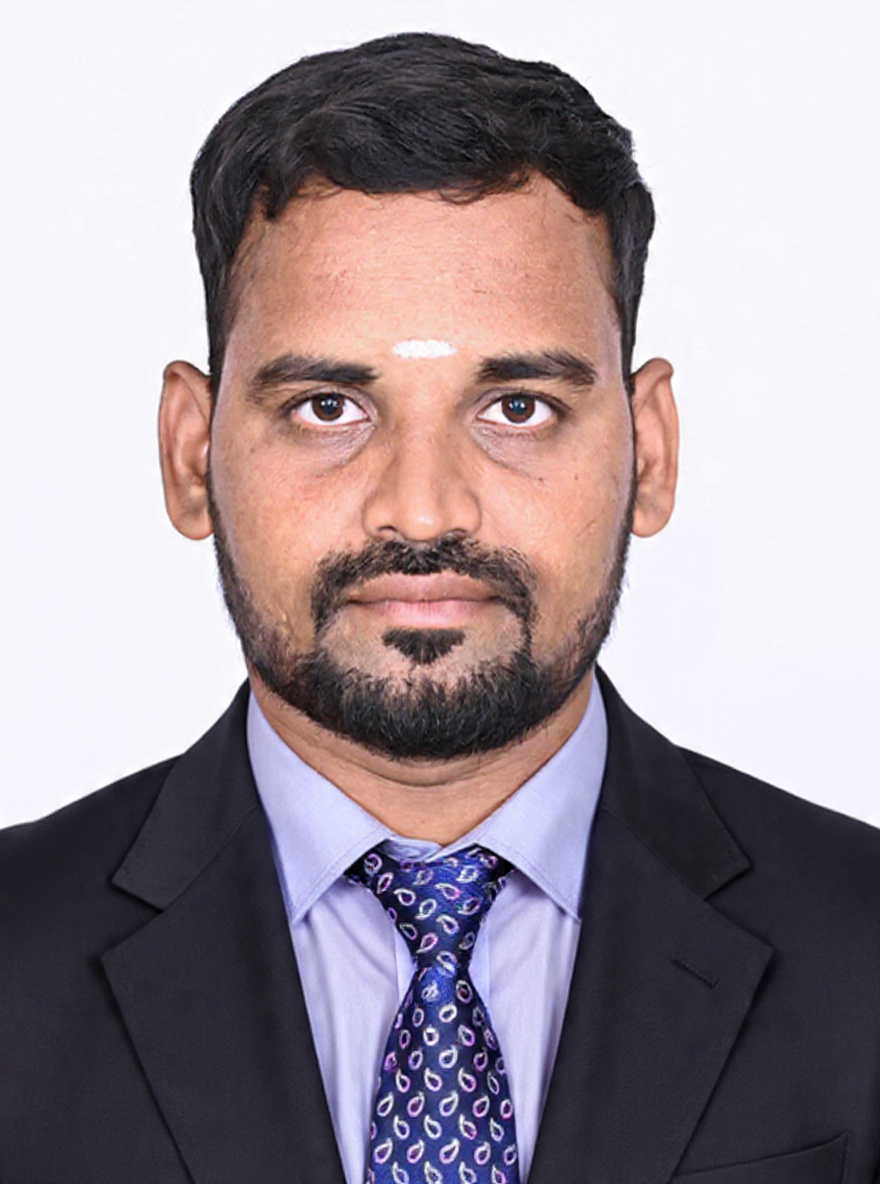


Mr. M. M. Manimaran
Assistant Professor
manimaran@mscartsandscience-edu.in
+91 6379481275
View Profile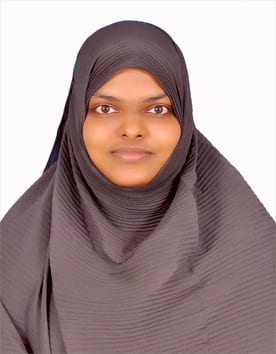
Ms. Maseera Thaseen M
Assistant Professor
mmaseerathaseen@mscartsandscience-edu.in
+91 9790121599
View Profile
Facilities
- Vacuum Pump
- Electronic Balance
- Hot Air Oven
- Incubator
- Microscopes
- Magnetic Stirrer
- pH Meter
- Water Bath
- Refrigerator
- Centrifuge
Rank Holders
Post Graduate Department of Electronics Science
| Academic Year | Student Name | Degree | Rank |
|---|---|---|---|
| 2022 | Kamaleshwaree S | M.Sc. Applied Electronics | 1 |
| 2022 | Padmavathy J | M.Sc. Applied Electronics | 2 |
| 2022 | Chandhanika V | M.Sc. Applied Electronics | 3 |
| 2022 | Justine J | M.Sc. Applied Electronics | 3 |
| 2022 | Mohamed Akram S | M.Sc. Applied Electronics | 6 |
| 2022 | Rajesh C | M.Sc. Applied Electronics | 10 |
| 2021 | Shanthosh Shree S | M.Sc. Applied Electronics | 1 |
| 2021 | Mohanalakshmi M | M.Sc. Applied Electronics | 2 |
| 2021 | Muhammad Haashim K | M.Sc. Applied Electronics | 4 |
| 2021 | Dhruvitha Sri M | M.Sc. Applied Electronics | 6 |
| 2018 | Ishwarya K | M.Sc. Applied Electronics | 2 |
| 2018 | Arita K | M.Sc. Applied Electronics | 4 |
| 2018 | Bhuvaneswari S | M.Sc. Applied Electronics | 7 |
| 2018 | Karthika R | M.Sc. Applied Electronics | 8 |
| 2018 | Mohan Babu A | M.Sc. Applied Electronics | 9 |
| 2017 | Dhilruba Begam A | M.Sc. Applied Electronics | 1 |
| 2017 | Gejalakshmi A. R. | M.Sc. Applied Electronics | 2 |
| 2017 | Sriram S | M.Sc. Applied Electronics | 4 |
| 2017 | Suliman Khamis Ibrahim Ali | M.Sc. Applied Electronics | 5 |
| 2017 | Ramachandran P | M.Sc. Applied Electronics | 6 |
| 2017 | Bhuvaneshwari H | M.Sc. Applied Electronics | 7 |
| 2017 | Shanmuga Sundaram N | M.Sc. Applied Electronics | 8 |
| 2017 | Prasanthan S | M.Sc. Applied Electronics | 10 |
| 2016 | Kamaleshwar S | M.Sc. Applied Electronics | 4 |
| 2016 | Kishan R | M.Sc. Applied Electronics | 5 |
NEWS & EVENTS